
Defeating Xenophobia here ♦ Language Is a Class question here ♦
Defeating Xenophobia: Industrial Workers Lead
One struggle our collective has in South Africa is that many Comrades have been exposed to xenophobic propaganda. This propaganda seeks to explain unemployment and all the social ills in South Africa by blaming immigrants for “stealing our jobs.” Particularly the Sadek immigrants: Zimbabweans, Malawians, and Mozambiquans. One struggle we have embarked on is to refute that.
I myself used to believe that. I was a nationalist, a pan Africanist. It was through the struggle with other comrades that I came to see capitalists for who they were. Because we had people like Ramaphosa and other Black capitalists who also exploit Black workers. I saw that capitalists need racism to divide the working class. It was not about race, that one race was exploiting another race. Racism was just used by the capitalists as a division.
We have this discussion because some comrades or potential comrades who join our meetings believe that immigrants are stealing our jobs when, in fact, immigrants who are at the forefront of exploitation. You look at industries like restaurants. A lot of undocumented immigrants are the ones who are exploited. They’re not even getting paid. Even the tips they get from customers are taken by their bosses.
At a collective meeting during Youth Day, one thing we discussed was drug use. One youth suggested that foreigners are bringing drugs to South Africa. That is not true. It’s a prevalent propaganda, particularly blaming Nigerians and Malawians. One comrade believed that foreigners were stealing our resources. Some say, “Immigrants are taking over our country.”
And I always ask, “What country?” Because South Africa was built by immigrants.
I can make this example. South African industrialism emerged from the discovery of gold and platinum. My grandfather worked in those mines. He died as a result of injuries sustained in the mines.
He was so proud of this language that the mineworkers formed. Mineworkers came from Mozambique, Zambia, Namibia, Zimbabwe, and all the regions of South Africa. Different places speak different languages. Miners developed their own language called Fanakalo. It combined Portuguese from Mozambiquan miners, a bit of Zulu, Xhosa, English, Banda, and more.
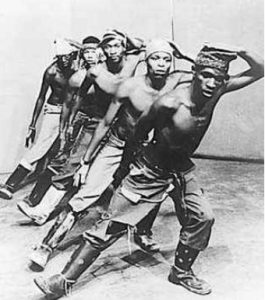
He was proud because the language was the unity of the international working class. A language which their bosses couldn’t understand. They complemented it with Gumboot Dancing. That was tap dance that miners used to communicate secretly when bosses wouldn’t let them speak.
So, the xenophobic notions that the bosses use, especially in South Africa, to divide the workers is ill-founded. We are struggling to refute it and to unite the working class here in spite of all the racist attacks. We are one working class. We are fighting for a communist world without borders or nations.
—Industrial worker comrade
Language Is a Class Question
The comrade in South Africa described the language miners invented so workers from different places could communicate.
Something similar happened in the USA. In the late 17th century, demand for rice increased worldwide. Southern US enslavers of the Carolinas kidnapped rice-cultivating African people as slaves. To prevent them from organizing rebellions, the enslavers chose them from different regions with different cultures and languages.
To break these barriers to organizing against their enslavement, the Africans developed a language that they could all understand but that the oppressors couldn’t. It is the Gullah or Geechee language still spoken in the isolated Sea Islands and coastal regions of South Carolina, Georgia, North Carolina, and Florida.
Millions also proudly speak it today in the Caribbean and in Sierra Leone, Africa. They call it Creole. Its spread there is an enduring testament to the resilience and indomitable fighting determination of the oppressed masses to fight for their liberation.
Gullah-speaking workers were among the first enslaved people in North America to pick up arms to fight for their freedom. When the British fought the US slave masters in their Independence War (“American Revolution”) they promised freedom to enslaved people who fought on their side.
Twenty thousand did. Many were Gullah Geechee. They were the true freedom fighters, not the colonial slave masters whose fight for independence from England was to perpetuate slavery, which Britain was moving to outlaw. For the British imperialists, chattel slavery was outliving its usefulness. They correctly envisioned wage slavery as a more efficient way to exploit and oppress the international working class.
The British lost the war, ending up with thousands of now free Black soldiers. Not able or willing to take them to England, they dropped them off in the Caribbean and Canada. Those sent to Canada were not welcomed because Canada was a slave nation. They migrated to Sierra Leone in Africa. Those sent to the Caribbean flourished and spread throughout the whole region.
Chattel slavery imposed by capitalism-imperialism is gone, but the Gullah Geechee still exist and their struggle for freedom continues. This time it must be to end wage slavery with a communist revolution. It is an honor and responsibility of the descendants of those brave fighters to continue their struggle. This time victory shall be ours! History is on our side!
—Inspired Comrade
Read more about Xenophobia and Capitalism here