

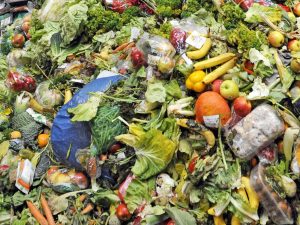
VANCOUVER (Canada), December 30— Canada is one of the most food-rich countries on the planet. Every year Canadian agriculture produces enormous surpluses of necessities: thirty million tonnes of wheat, twenty million tonnes of canola, millions of tonnes of pulses (lentils, peas), vast quantities of oats, barley, potatoes, fruits, vegetables, meat, milk, and eggs.
Canada is among the world’s top exporters of grain and oilseeds, shipping food worldwide from its highly mechanized, productive farming system at home. The agri-food sector generates well over one hundred billion dollars annually. It produces far more food than the Canadian population itself could ever consume. Canada already produces more than enough calories, protein, and nutrients to feed everyone living here.
Yet the reality for working people is brutal. Despite this abundance, around one in four Canadians lives in a food-insecure household. Millions of people skip meals, cut portion sizes, rely on food banks, or worry constantly about whether there will be enough to eat at the end of the month.
Food insecurity is not evenly distributed. It hits hardest among low-wage workers, Indigenous communities, single-parent households, seniors on fixed incomes, migrants, and people on social assistance. Children are growing up hungry in a country that exports grain by the shipload. This is not an accident or a temporary glitch. It is the normal functioning of capitalism.
The ruling class wants us to believe that hunger is caused by personal failure, bad budgeting, or unfortunate circumstances. But hunger in Canada exists alongside overflowing silos, supermarket waste, and record corporate profits. Food is treated as a commodity, not a social necessity. It is produced to be sold at a profit, exported when prices are higher abroad, and destroyed or dumped when markets are saturated. Under capitalism, the question is never “Do people need food?” but “Can they pay?” If they cannot, the system has no solution except charity, food banks, and moralizing lectures.
This contradiction exposes the lie at the heart of capitalism. Hunger does not exist because we lack resources or productive capacity. It exists because the means of production and distribution are privately owned and organized for profit. Farmers are squeezed by agribusiness monopolies. Grocery chains rake in obscene margins. And workers face rising prices while wages lag. The result: abundance on paper and deprivation in reality.
Communism offers a fundamentally different principle: “From each according to their ability and commitment, to each according to their needs.” In a communist society, food production will be socially planned to meet human needs directly, not filtered through markets and profit calculations. The land, equipment, processing facilities, and distribution networks will be collectively owned and controlled by the masses.
Surpluses in one region will be used to guarantee food security for our class everywhere, not to pad export revenues or corporate balance sheets. No one will have to prove their desperation to a charity or line up at a food bank.
In communism, the question of hunger disappears. Not because food magically increases, but because social priorities change. When society already produces more than enough, ensuring that everyone eats becomes a straightforward organizational task, not a moral dilemma. Canada’s existing agricultural capacity makes this especially clear. Hunger here is not tragic; it is obscene. It is the result of a system that subordinates human life to profit.
The fight for communism is not abstract or utopian. It is about ending the daily violence of hunger in a world of plenty. Canada already has the food. What it lacks is a social system worthy of that abundance.