Workers Internationally “Frustrated, Angry, Hungry for Power”
If it weren’t for the Red Flag, I would never have known about the massive strike activities in New Delhi and across India.
The Iranian rulers are deathly afraid to show what is happening in India. The official newspaper does not carry any stories of the millions of people in the streets of New Delhi.
Due to the war, I am only getting the Red Flag irregularly.
I live in Shiraz, a major oil-producing area. I appreciate that your newspaper carries the stories that affect the working class. I am very impressed with your regular reporting of the Gaza genocide and the workers’ struggle in South Africa.
I wondered why the Iranian mass media is completely silent about the New Delhi demonstrations, while praising Modi for his ‘neutral stand’ on war, despite his support for Israel’s fascist machine. The Modi government is very opportunistic. It is getting Iranian oil during the US sanction waiver.
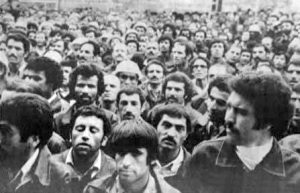
Iranian oil workers went on a massive strike during 1976-78. The Shah’s regime was nearly bankrupt because of the shortage of oil revenue. In 1979, during the Islamic Revolution, oil workers seized factories in Shiraz, Tehran, and other areas. Workers elected Shura councils, which purged the regime of the Shah. Many Marxists and left-wing oil workers controlled the Shura movement.
In 1980, the Islamic regime carried out sustained repression of the Shura councils. They detained, blocked, and tortured oil workers who supported the Shura movement. The Islamic Republic put the most reactionary Islamic fanatics in charge of the oil refineries.
The Iran-Iraq War (1980-88) gave an added excuse to suppress the oil workers to justify ‘national’ interest. The government banned oil workers’ strikes. Thousands of oil workers were fired.
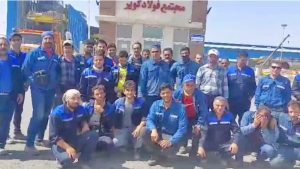
However, after the war, Iran faced devastating economic destruction. The oil workers in Shiraz went on a hunger strike. Many were unpaid for months. The regime brutally crushed the collective strike after fifteen days. But it exposed how vulnerable the Islamic regime was. Even after decades of severe repression, the oil workers were able to organize massive strikes.
For the past thirty years, the Islamic Revolutionary Guard Corps (IRGC) has taken full control of oil refinery operations. Every worker is vetted, placed under restrictions, and monitored in their communications. Any sign of collective action is severely suppressed. Workers are tortured and jailed indefinitely.
The refineries use the peasants and unemployed from the rural areas and train them to do dangerous work in oil factories. Most are contract workers and go months without pay.
Now, in the current war crisis, oil workers are essential to the state’s survival. The war has created unbearable conditions. Oil workers are forced to work even under the threat of missile attacks to keep the facilities running. They are asked to sacrifice their salary for the ‘national’ defense. Massive inflation and months of unpaid wages are boiling under the surface. There is extraordinary discontent.
This is why the Iranian rulers are not showing what is happening in India. They only show pictures of Khamenei’s funerals. But no amount of nationalist frenzy will calm the anger of an empty stomach. That is why the Red Flag is so important. The oil workers have never given up.
The international working class is frustrated, angry, and hungry for power. Please keep sending your literature.
—Reader in Iran
Read Iran War: Who’s Winning, Who’s Losing? here